

An Exhibition of Korean Imperial Treasures

|

|

|

|

|
By Yoon Ha-jeong, Reporter
May 13, 2026
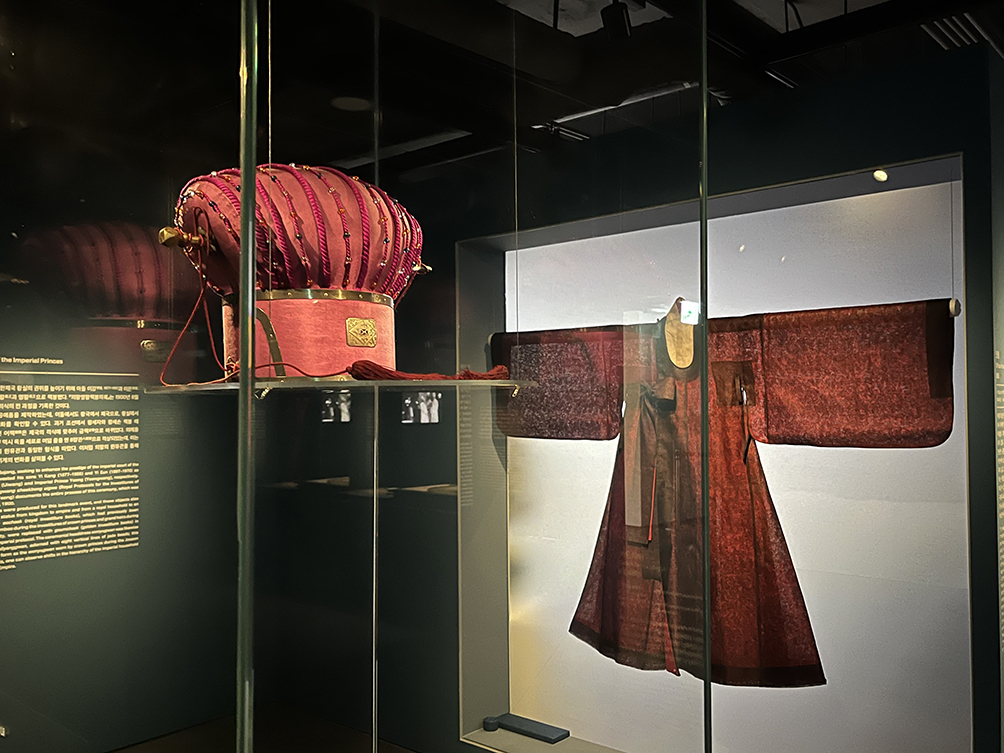
SEOUL — A new exhibition in Seoul traces an unlikely convergence of royal splendour and religious reconciliation. “Andong Byeolgung: Layers of Time”, opened at the Seoul Museum of Craft Art in Anguk-dong, brings together artefacts of Korea’s last imperial household and the Catholic Church, two institutions once bitterly opposed. Organised with the Oryundae Korean Martyrs Museum, the exhibition runs free until August 29, 2027, with some items rotated during the display.
A Palace Revisited
The museum stands on the site of Andong Byeolgung, a Joseon-era royal residence long used for weddings. In 1906 Emperor Gojong refurbished the palace for the marriage of his son, Emperor Sunjong, to Empress Sunjeonghyo. Though the palace was later demolished—its grounds becoming a girls’ school before being reborn as a museum—the exhibition restores its historical significance by returning royal objects to their original setting.
The display centres on two couples: Emperor Sunjong and Empress Sunjeonghyo, wed at the site, and Prince Yi Kang (Prince Ui) and his consort, Lady Kim Deok-su, who spent their later years there.
Treasures of an Empire
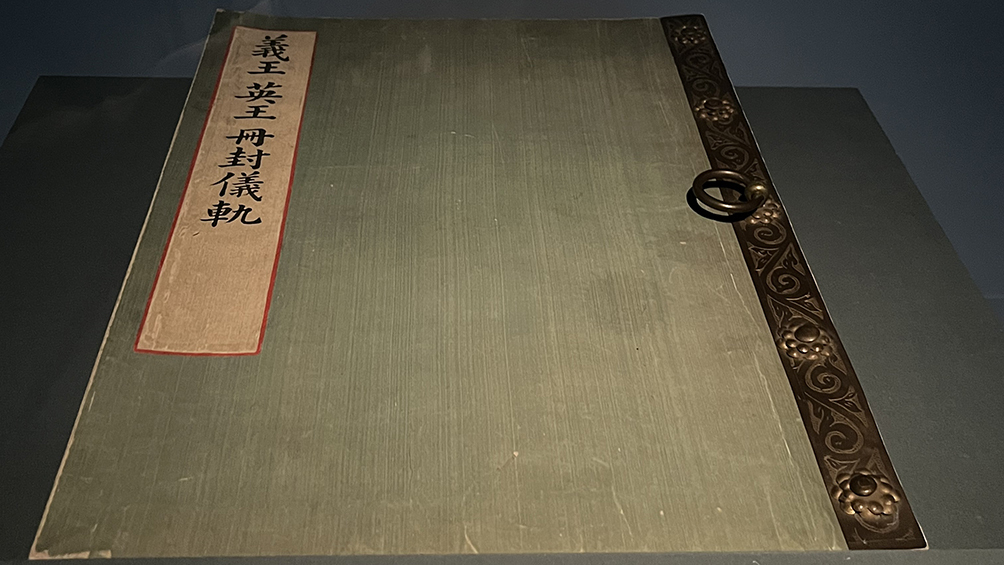
Among the highlights are two national treasures: the Uiwang Yeongwang Chaekbong Uigwe, documenting the 1900 investiture of Prince Yi Kang and Prince Yi Un, and the Chubong Chaekbong Uigwe, which records posthumous royal honours. Commissioned by Emperor Gojong, these richly illustrated protocols detail court ceremonies and the craftsmanship behind them.
Other objects include the only surviving example of a wonyu-gwan, the ceremonial crown of Prince Ui, now displayed as a reproduction to prevent further deterioration. Court attire such as a dangui jacket and a nambawi winter cap worn by Empress Sunjeonghyo appear alongside delicate hair ornaments—binyeo and kkoji—preserved by Lady Kim.
Conversion and Contrition
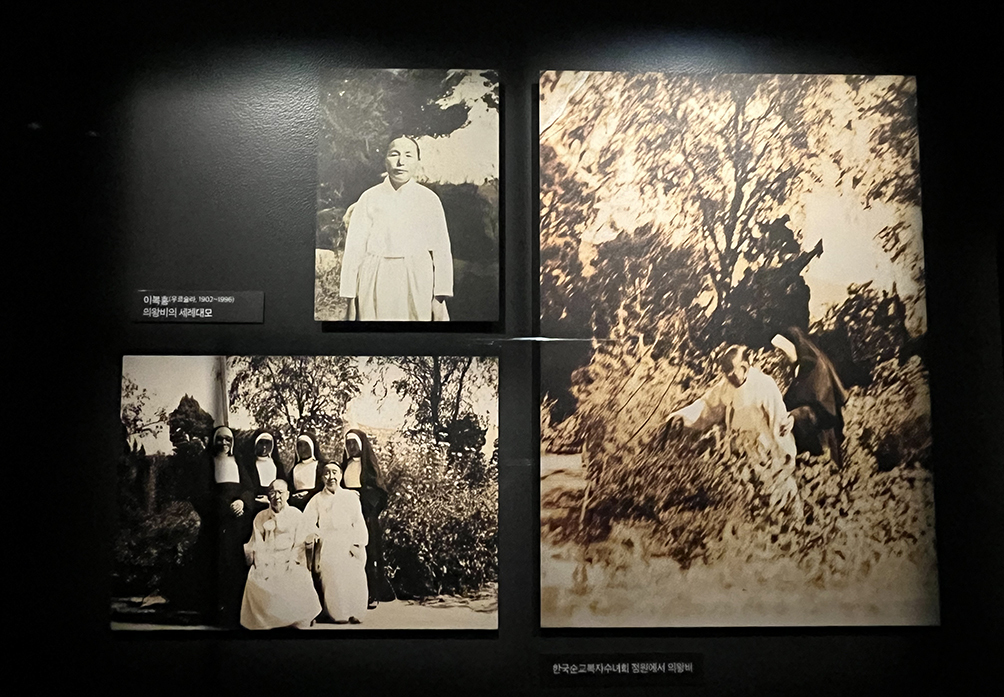
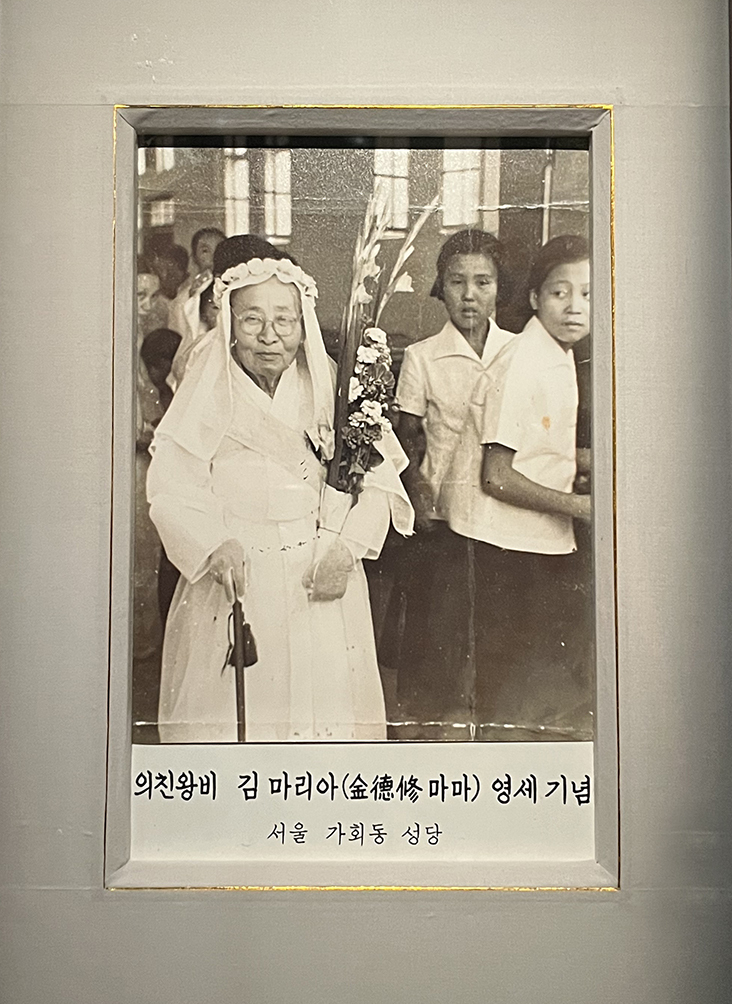
The collection owes its existence to a late and striking act of faith. Lady Kim Deok-su (Maria, 1878–1964), Princess Consort Ui, was baptised in 1955 at Gahoe-dong Parish in Seoul, reportedly in her late seventies. Her husband, Prince Yi Kang (Pius), is also said to have embraced Catholicism, expressing a wish to atone for the Joseon court’s persecution of Catholics—a history that produced thousands of martyrs.
Between 1953 and 1956 Lady Kim donated a substantial number of court artefacts to the Congregation of the Sisters of Our Lady of Perpetual Help, known in Korea as the Korean Martyrs’ Blessed Sisters. The gesture has since been seen as a symbolic reconciliation between throne and Church.
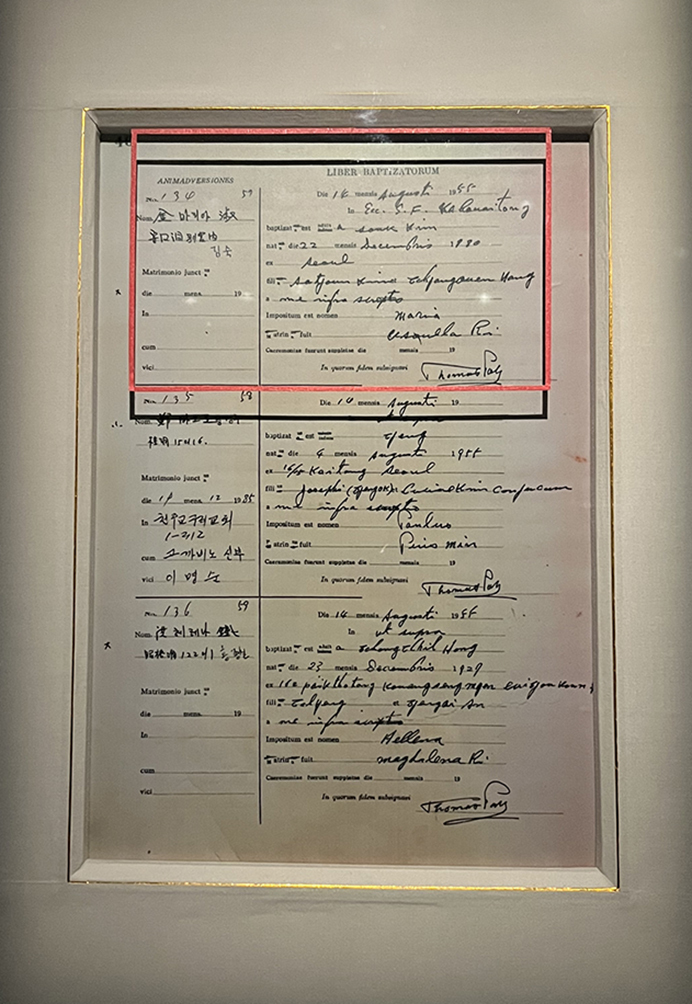
Photographs of her baptism, her registry entry, and images of her sponsor, Lee Bok-heung (Ursula), a Secular Franciscan, further illuminate the personal dimension of this conversion and its broader historical resonance.
Custodians of Memory
Sister Ko Seong-a, director of the Oryundae Korean Martyrs Museum, credits the congregation’s unusual mission for preserving such artefacts. Founded by Father Bang Yu-ryong, a Servant of God, the order sought not only to document the Church’s history but also to safeguard Korea’s cultural heritage at a time when such efforts were rare.
“From the beginning, the sisters travelled across the country collecting artefacts of national significance,” she said, noting that their work extended beyond strictly religious objects.
The museum, long based in Busan, is preparing to relocate to Yongin in Gyeonggi Province. A public lecture titled “Imperial Life Becomes Artefact” will be held on May 23, led by Sister Yoo Agnes, a curator at the museum.


