

How Friendship and Family Ties Left an Ecumenical Mark on a Seoul Parish

|

|

|

|

|
By Lee Hak-ju, Reporter
May 20, 2026
SEOUL — The dedication plaque at Banpo Catholic Parish contains a small historical puzzle.
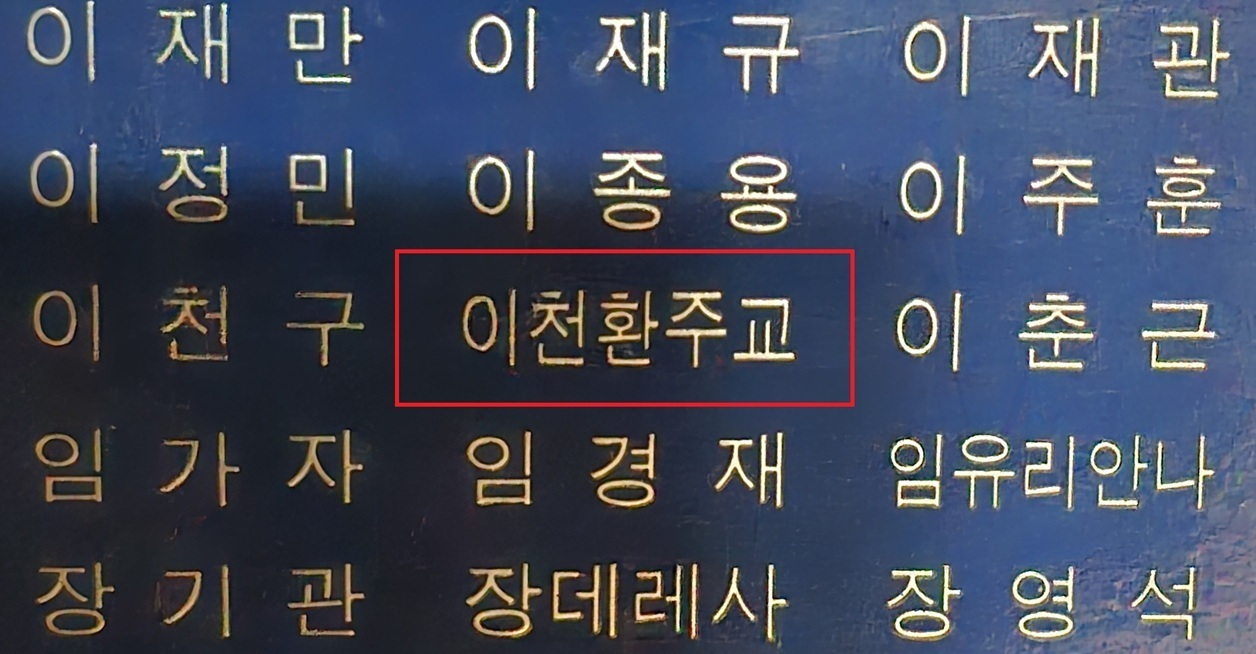
Installed during the consecration of the church building in May 1980, the plaque records the names of donors who helped finance construction. Among them appears “Bishop Lee Chun-hwan” — a figure absent from the annals of Korea’s Catholic episcopate.
The explanation lies not in clerical confusion but in a story of friendship, family ties and a brief but influential ecumenical spirit that flourished in the decades following the Second Vatican Council.
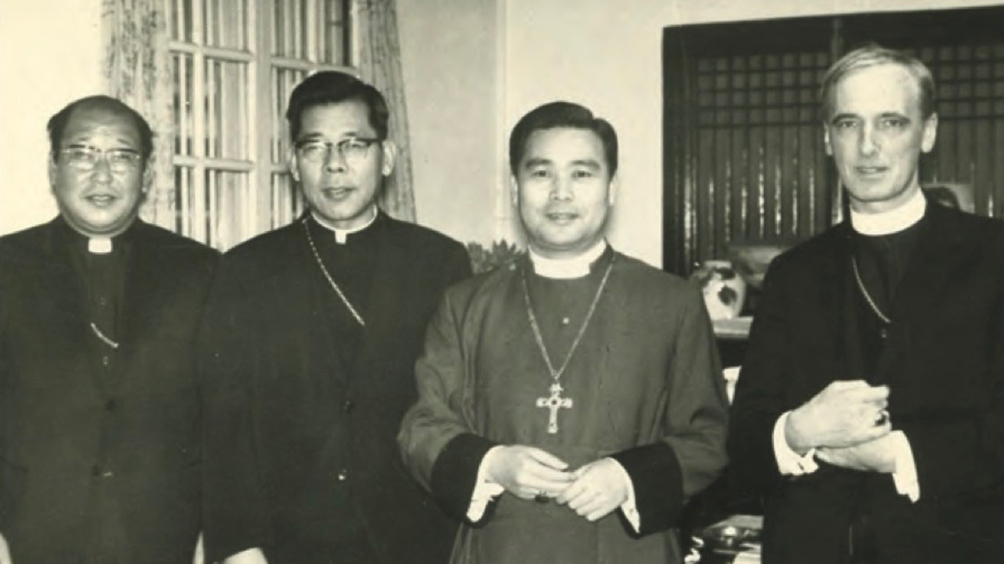
Bishop Lee Chun-hwan was the first Korean bishop of the Anglican Church of Korea and head of the Anglican Diocese of Seoul. His contribution to a Catholic parish in southern Seoul reflected relationships that crossed denominational boundaries and endured across decades.
Banpo Parish, part of the Archdiocese of Seoul, marks its fiftieth anniversary this year. Founded in 1975, when Gangnam remained only partly developed and apartment complexes were beginning to reshape the southern bank of the Han River, the parish became an early centre of Catholic life in the district. Over time, Banpo gave rise to substantial daughter parishes, including Seocho-dong and Bangbae-dong.
A Name on the Plaque
The church itself was built two years after the parish’s establishment and designed by the late Professor Yoo Hee-jun, whose work also included the interior of the Blue House state guesthouse.
The dedication plaque, installed during the consecration ceremony on May 30, 1980, preserves the names of those who supported the project financially — including Bishop Lee.
The connection began not through institutional dialogue but through geography.
Around 1977, Bishop Lee moved into an apartment in Banpo after leaving the Anglican bishop’s residence in Jeong-dong, central Seoul. The traditional hanok, situated opposite Seoul Anglican Cathedral, had housed successive Anglican bishops — many British-born — before the diocese was divided into the Seoul and Daejeon jurisdictions.
Bishop Lee had lived there for roughly a decade after becoming Bishop of Seoul in 1965. Writing in the Chosun Ilbo on May 27, 1978, he observed that nearly a year had passed since relocating to Banpo, explaining that the ageing residence proved difficult to heat and increasingly impractical for modern Korean domestic life.
Although he continued travelling between Banpo and Jeong-dong for diocesan duties until retiring in 1983, Banpo gradually became home. Later years were spent nearby in Bangbae-dong.
A Sister Named Teresa
The deeper connection to Banpo Parish came through family.
Neither Bishop Lee nor his younger sister, Lee Yang-rye, married. After returning to Seoul from North Jeolla Province — where she had once entered religious formation as a Catholic novice without proceeding to final vows — she shared her brother’s household and cared for domestic affairs.
She was also Catholic.
Baptised Teresa, Lee Yang-rye became a parishioner of Banpo Parish after the siblings moved to the neighbourhood. Through her, the parish’s founding pastor, Father Park Byung-yoon, came to know Bishop Lee and began visiting the family home.
Family affection later merged with ecumenical friendship.
Two Bishops of One Era
Bishop Lee’s relationship with Cardinal Stephen Kim Sou-hwan added another layer to the story.
The two churchmen belonged to the same generation, both born in 1922, and occupied leadership roles during a period shaped by the ecumenical reforms encouraged by the Second Vatican Council. Cardinal Kim became Archbishop of Seoul in 1968, while Bishop Lee led the Anglican Diocese of Seoul and actively promoted interchurch cooperation.
By the time he settled in Banpo, Bishop Lee was serving as inaugural chairman of the Anglican-Catholic Re-unity Promotion Committee.
The friendship also carried personal dimensions. During one of Lee Yang-rye’s illnesses, Cardinal Kim administered the Anointing of the Sick to her — a gesture Bishop Lee reportedly remembered with gratitude.
Affection for his sister and friendship with the Cardinal together help explain the Anglican bishop’s presence on a Catholic donor plaque.
Beyond Ceremony
The friendship did not end with financial support.
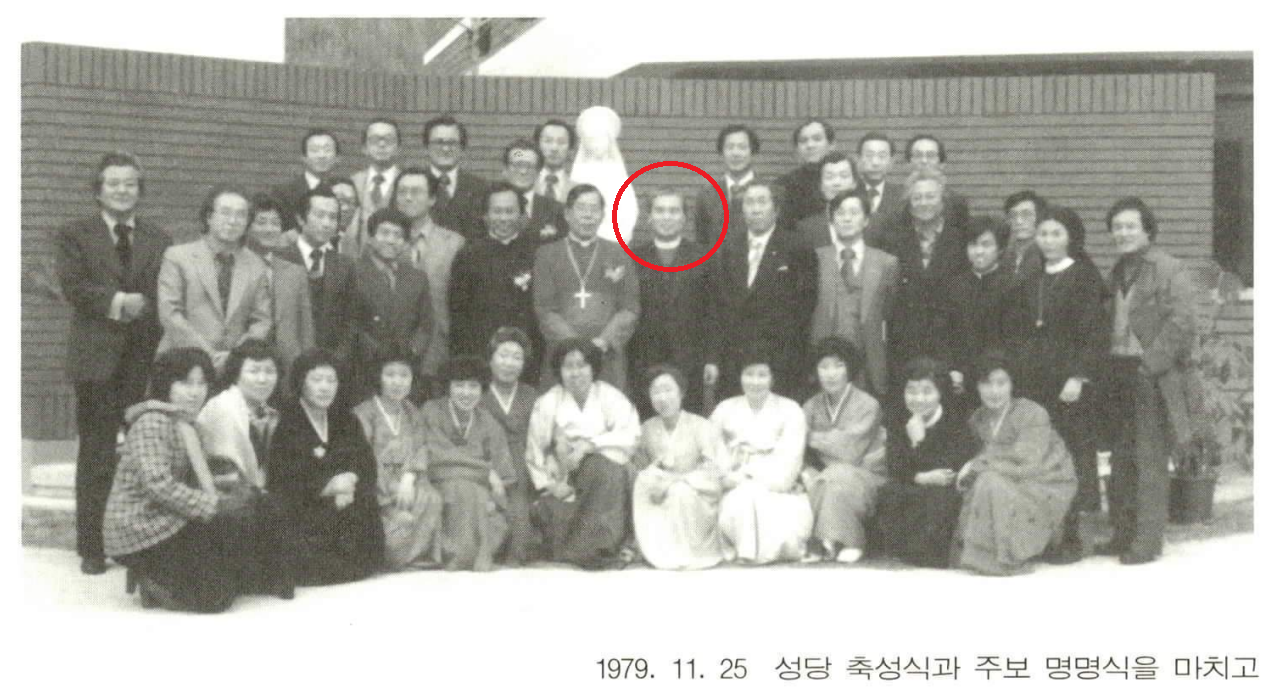
On November 25, 1979, Cardinal Kim presided over the consecration of the new church and the designation of Christ the King as Banpo Parish’s patron. Photographs from the day show Bishop Lee standing beside the Cardinal, smiling amid the celebrations.
Father Park later invited Bishop Lee to lecture at the parish Bible academy. After Father Park transferred to Seocho-dong Parish, the invitation extended further — to the new parish’s own consecration and educational programmes.
Such exchanges reflected an ecumenical culture less dramatic than theological dialogue but perhaps more enduring: clergy visiting one another, teaching together and participating in shared moments of pastoral life.
Father Park died in 2002. Cardinal Kim followed in 2009.
Despite advanced age and declining health, Bishop Lee attended the Cardinal’s funeral to bid farewell to a longstanding friend. The loss appears to have weighed heavily on him.
The following year, in 2010, Bishop Lee died at the age of 87.
The story preserved in Banpo Parish’s plaque recalls a Christian hope larger than denominational borders — a vision of fellowship sustained not merely by doctrine but also by friendship, gratitude and shared witness.


