From First Communion to His Death: The Nuns Who Remember “Young Carlo Acutis”
[In Search of My Friend Acutis] (2) Lecco, Northern Italy
폰트 작게폰트 크게인쇄공유
×
By Lee Hak-ju, Reporter
October 14, 2026
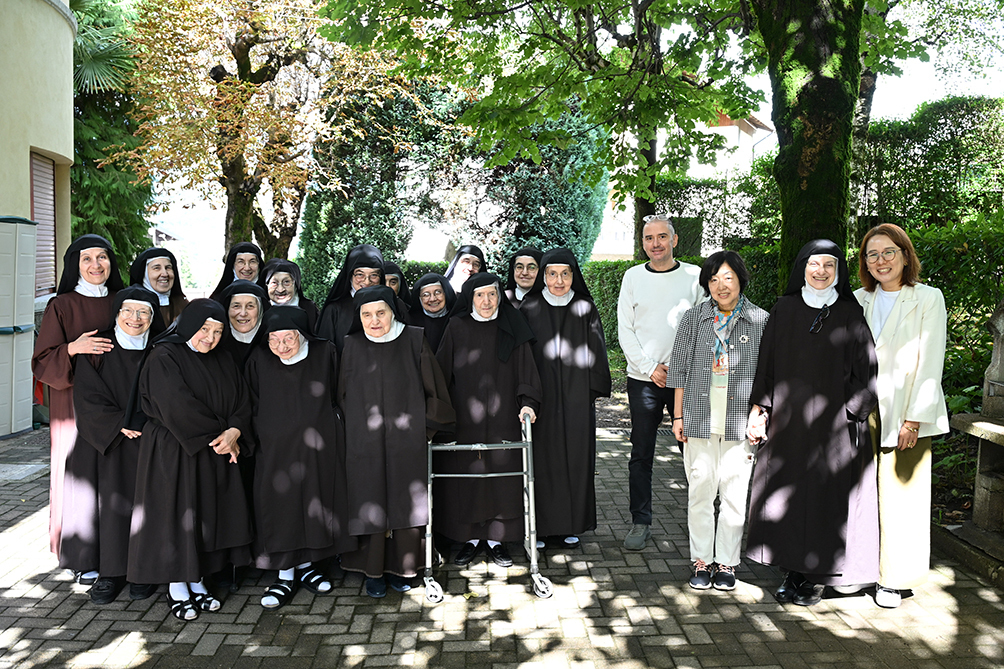
Children’s author Jung Jin (Rosa) (third from right) poses for a group photo with the Romite Ambrosiane community, including Mother Maria Alessandra Regalia, the abbess. Interpreter Lee Kyung-jin (Catherine) and volunteer Vittorio Acceni are also in the photo.
The monastery of the Romite Ambrosiane, where the saint received First Communion at age 7
Remembered as a boy who studied and played like other children his age, yet faithfully responded to grace
Fire broke out barely a month after his canonization
The saint’s relics, the garden and a statue of Our Lady were spared
On Sept. 8, 1991, four months after he was born in London, St. Carlo Acutis moved to Milan, Italy, when his parents returned home from England. He grew up in Milan, and on June 16, 1998, at the age of seven, he received his First Communion at a cloistered monastery in Bernaga, in the province of Lecco, north of Milan. Built in the 17th century, the monastery was home to the Romite Ambrosiane, a community of hermit sisters devoted to prayer and contemplation. After receiving the Eucharist there for the first time, Acutis returned to the monastery every year. The sisters watched him grow in faith, and they still vividly remember a bond that lasted until shortly before his death.
Last October, however, a major fire severely damaged the monastery. The sisters escaped unharmed but lost the home where they had lived for many years. The Salesian Sisters (Daughters of Mary Help of Christians) then offered them a building they had used as a summer retreat house: Casa Maria Ausiliatrice in Cassina Valsassina, in the province of Lecco, at the foot of the Alps. Despite the community’s difficult circumstances, Mother Maria Alessandra Regalia, the abbess, gladly agreed to an interview, telling me, “We have a lot to tell you about Carlo.”
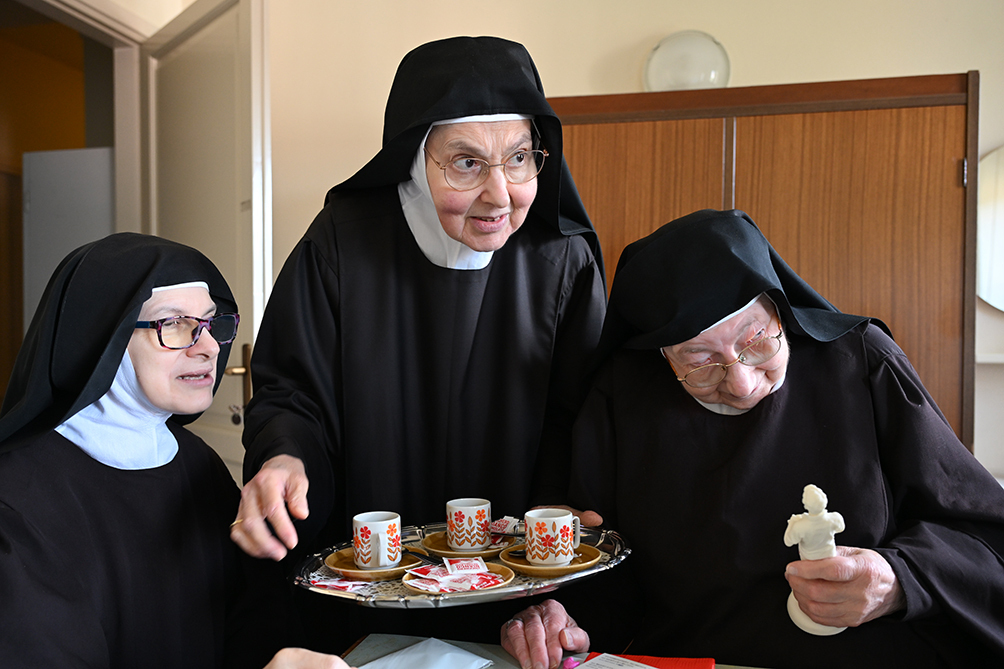
Mother Maria Alessandra Regalia, the abbess (center), Sister Maria Emanuela Segala (right), who was abbess when Carlo Acutis made his First Communion, and Sister Letizia Contardi (left) listen to an explanation of the gifts from the reporter and his mother: a traditional Korean rosary pouch and a statue of St. Carlo Acutis.
On Sept. 11, I took a train from Milano Centrale to Lecco to meet the sisters who remember Acutis. When I arrived at Lecco station after a ride of about 40 minutes, Vittorio Acceni, a local parishioner sent by the abbess, was waiting for me. He drove us to the retreat house. My mother, children’s author Jung Jin (Rosa), was the first to recognize the statue of Mary Help of Christians standing in the courtyard, and she greeted it with delight. She is currently in formation with the Association of Salesian Cooperators, which follows the spirituality of St. John Bosco.
Mother Alessandra and the other sisters came out to welcome us. In the parlor where they led us were photos of the burned monastery, a calendar featuring pictures of young Carlo, and relics of his pericardial tissue and hair that had survived the fire. A few moments later, Sister Maria Emanuela Segala, who was abbess when Acutis made his First Communion, entered with the help of another sister.
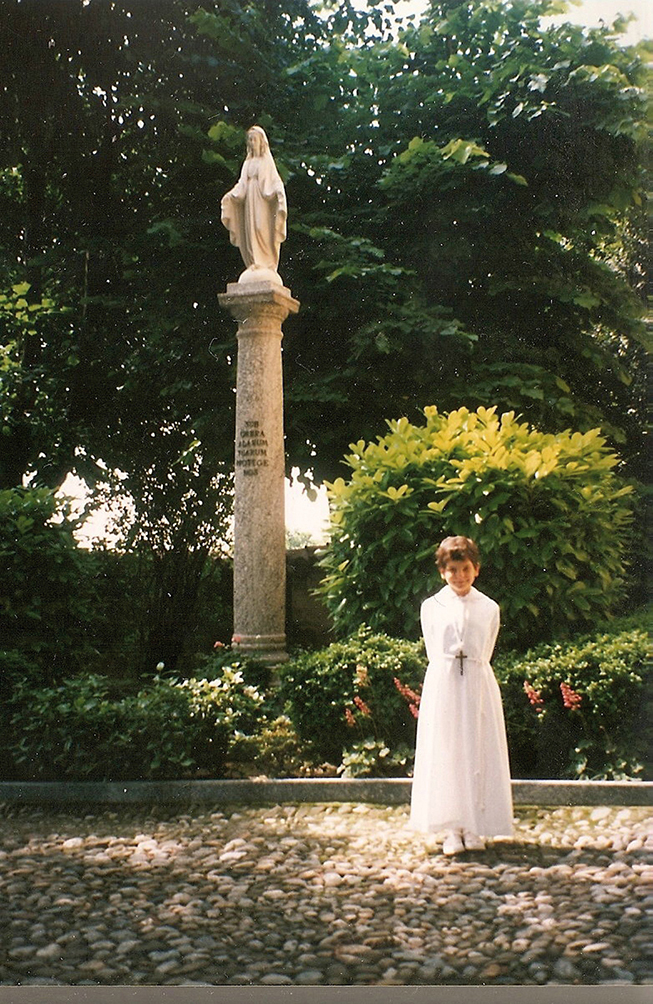
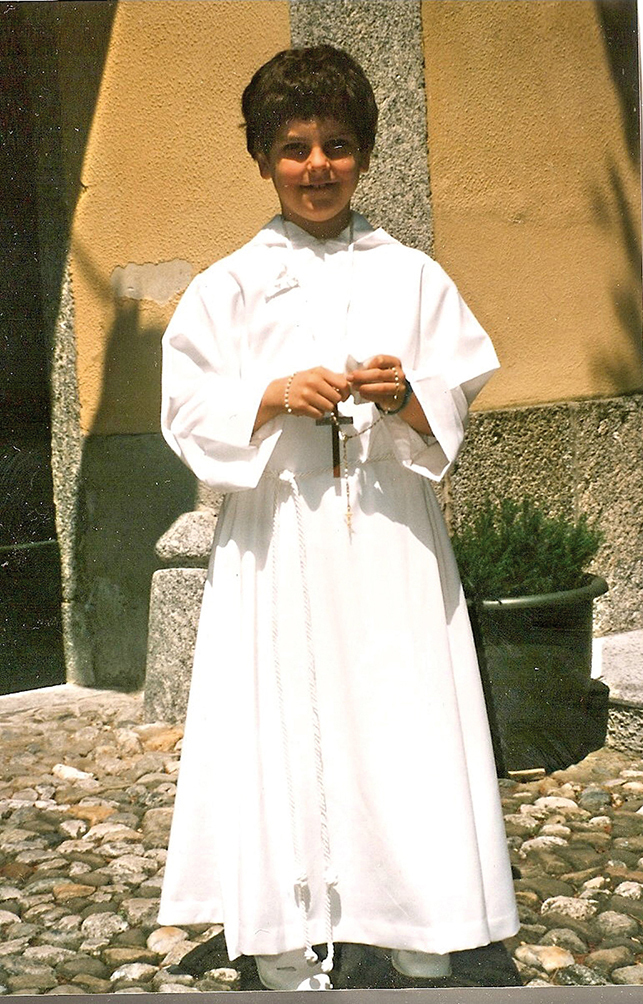
Carlo Acutis at his First Communion at the Romite Ambrosiane monastery in Bernaga on June 16, 1998. Source: www.carloacutis.com
“It wasn’t a passing whim. It was a real desire.”
“Carlo was just like other children his age. But after he received Communion, he was truly moved — joyful and happy. He seemed to feel something, and he could hardly keep still.”
Sister Emanuela, now nearly 90, vividly recalls June 16, 1998, the day seven-year-old Carlo Acutis received the Eucharist for the first time.
Drawn to the Eucharist from early childhood, Acutis made his First Communion at seven, a year earlier than his peers. Fr. Aldo Locatelli, pastor of San Gottardo al Corso Parish in the Archdiocese of Milan, who had closely observed the faith life of Acutis and his family, judged that the boy was well prepared.
The family was registered at Santa Maria Segreta Parish in Milan, but Carlo’s mother, Antonia Salzano, served as a catechist at San Gottardo al Corso and brought her son with her.
“Father understood that Carlo’s wish to receive Communion early was not a passing whim but a serious desire.”
Carlo Acutis at his First Communion at the Romite Ambrosiane monastery in Bernaga on June 16, 1998. Source: www.carloacutis.com
Acutis was able to make his First Communion early with special permission from his spiritual director, Fr. Elio Carrai, and from Archbishop Pasquale Macchi, the former private secretary of St. Paul VI. Archbishop Macchi, then retired, confirmed the boy’s spiritual maturity and recommended that the sacrament be celebrated in a quiet setting that would foster inner recollection rather than festive excitement. Fr. Locatelli therefore asked the Bernaga monastery, with which he had ties, to host the First Communion Mass. It was the first time the community had hosted a child’s First Communion.
That day, Acutis came to the monastery with his parents and grandmother. With the entire religious community present, the Mass was celebrated in the Ambrosian Rite, the liturgical tradition of the Archdiocese of Milan, and the sisters sang Eucharistic hymns they had chosen.
After his First Communion, Acutis’s faith grew deeper still. He began attending Mass and spending time in Eucharistic adoration every day. Around the age of seven, he wrote down his “plan for life”:
“To be always united with Jesus — this is my life plan.”
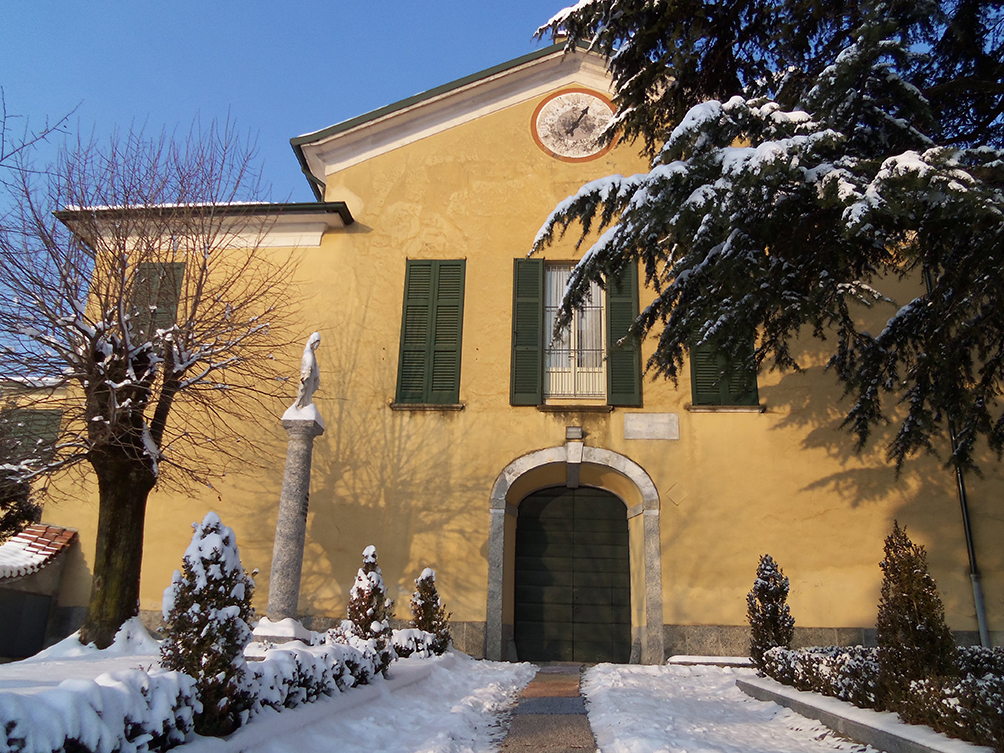
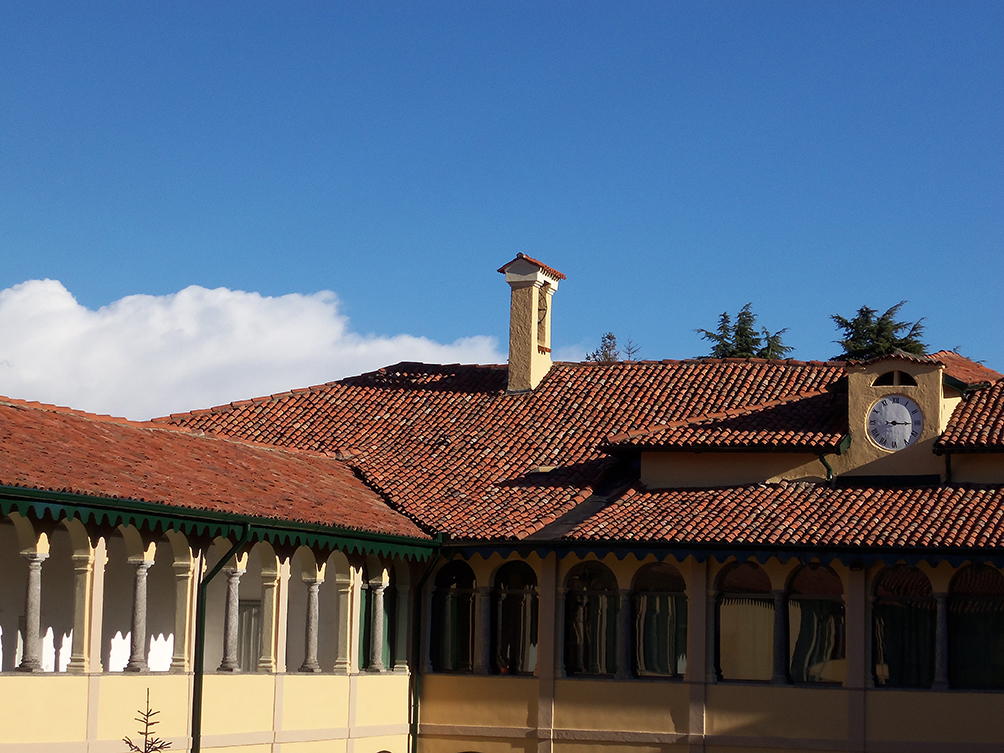
A view of the Romite Ambrosiane monastery in Bernaga before it was damaged by fire on Oct. 11, 2025. Courtesy of the Romite Ambrosiane
The Bernaga monastery before the fire. Courtesy of the Romite Ambrosiane
“Remember me in your prayers”
His First Communion also marked the beginning of Acutis’s bond with the Bernaga monastery. His family visited every year, and the sisters watched the young boy mature spiritually as he grew. They say Acutis cannot be described simply as an “ordinary boy.” He studied, played and lived everyday life like his peers, but he responded constantly to the grace he had been given.
“Carlo’s greatness lies in the fact that he never wasted anything he received. He was faithful.”
Sister Emanuela also recalls another scene. At the end of each visit, Acutis would let his parents leave first and then never forget to ask the sisters the same thing: “Remember me in your prayers!”
His last visit to the monastery was about three weeks before his death. One Sunday evening that October, his father, Andrea Acutis, called. “Carlo’s whole body is swollen,” he said, asking for prayers. The next morning came word that the boy could barely stand, and the sisters began praying for him.
On Oct. 12, 2006, Acutis died at the age of 15. When Andrea called again, he told the sisters, “Carlo didn’t make it,” and then thanked them for their prayers. Sister Emanuela remembers replying, “Thank us? We didn’t even obtain a miracle.” The father’s answer surprised her.
“I believe Carlo died because the Lord wanted to make him a model for young people. Carlo lived well, and he died well.”
Her eyes welling up, Sister Emanuela said, “Every time I tell this story, I still get chills. A father who had just lost his son said that to me. Imagine what he must have been feeling.”
After their son’s death, his parents continued to visit Bernaga every year, and the sisters even watched his twin siblings, Michele and Francesca, born in 2010, grow up.
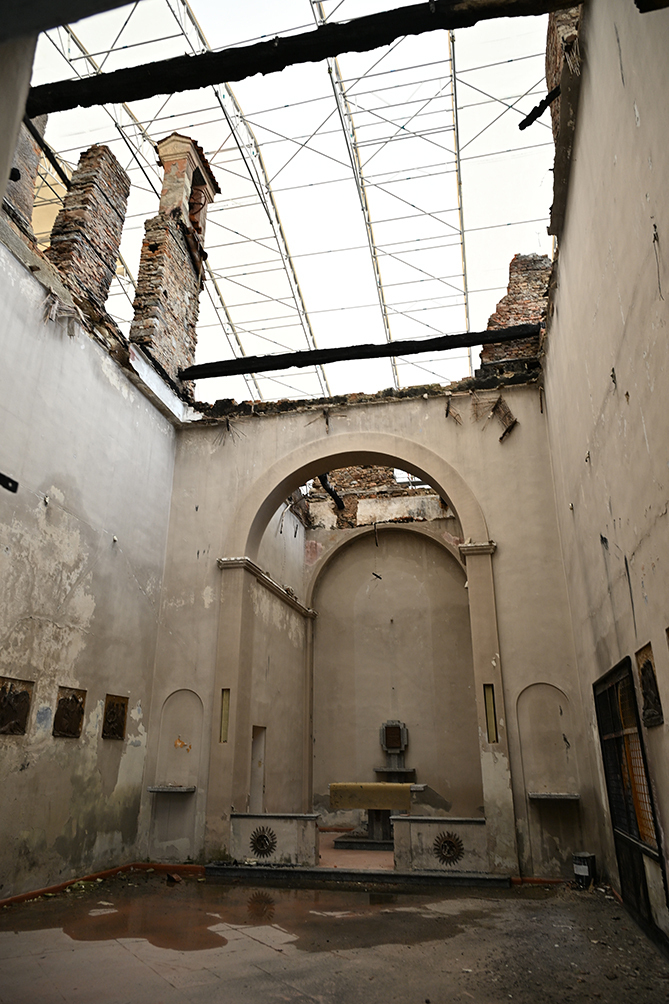
The church of the Romite Ambrosiane monastery in Bernaga, where St. Carlo Acutis received his First Communion on June 16, 1998, at age 7, shows damage from the fire of Oct. 11, 2025.
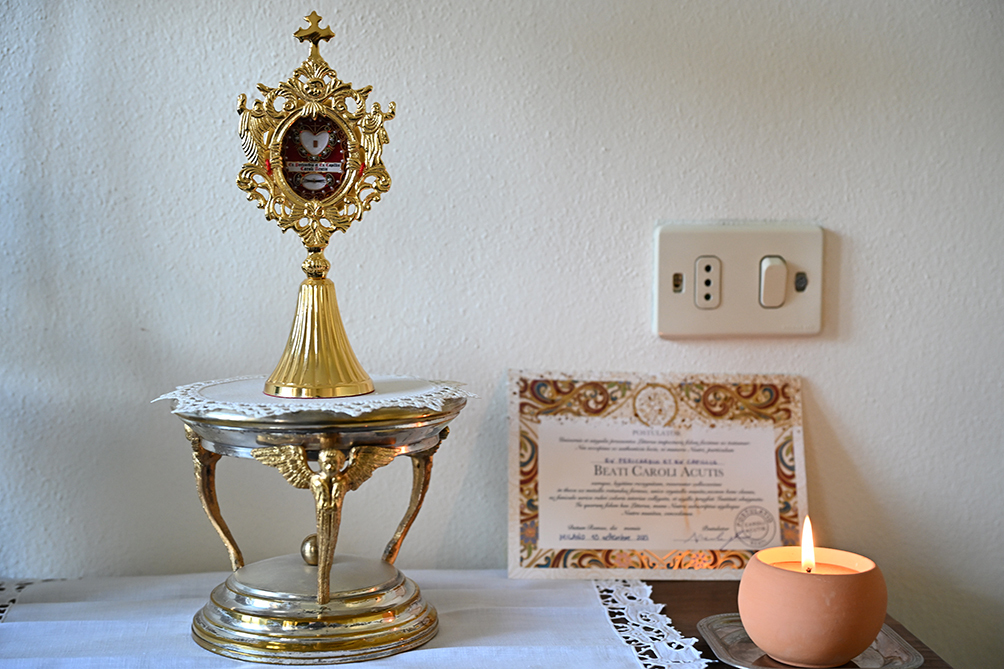
Relics of St. Carlo Acutis’s pericardial tissue and hair, with their certificate of authenticity, survived the fire that broke out on Oct. 11, 2025, the eve of his feast day.
What survived the flames
After the interview, we shared a lunch the community had lovingly prepared. As the meal was ending, Mother Alessandra asked whether we would like to visit the fire-damaged monastery in Bernaga. I nodded eagerly, and Vittorio kindly took the wheel once again.
The hilltop monastery still bore the scars of last year’s fire. Even the church where Acutis made his First Communion had not escaped the flames. Most of the roof and upper floors had burned away, leaving the building’s frame exposed.
The fire broke out on the evening of Oct. 11, 2025, barely a month after Acutis was canonized on Sept. 7. The next day was his liturgical memorial. Because it fell on a Sunday that year, the sisters had exposed his relics in the church a day early. Before Vespers, the sister in charge brought the relics back inside, but instead of carrying them to the upper floor where they were usually kept, she left them temporarily in the sacristy next to the church. That is why they survived. After the fire, firefighters and civil protection volunteers found the relics intact, along with their certificate of authenticity.
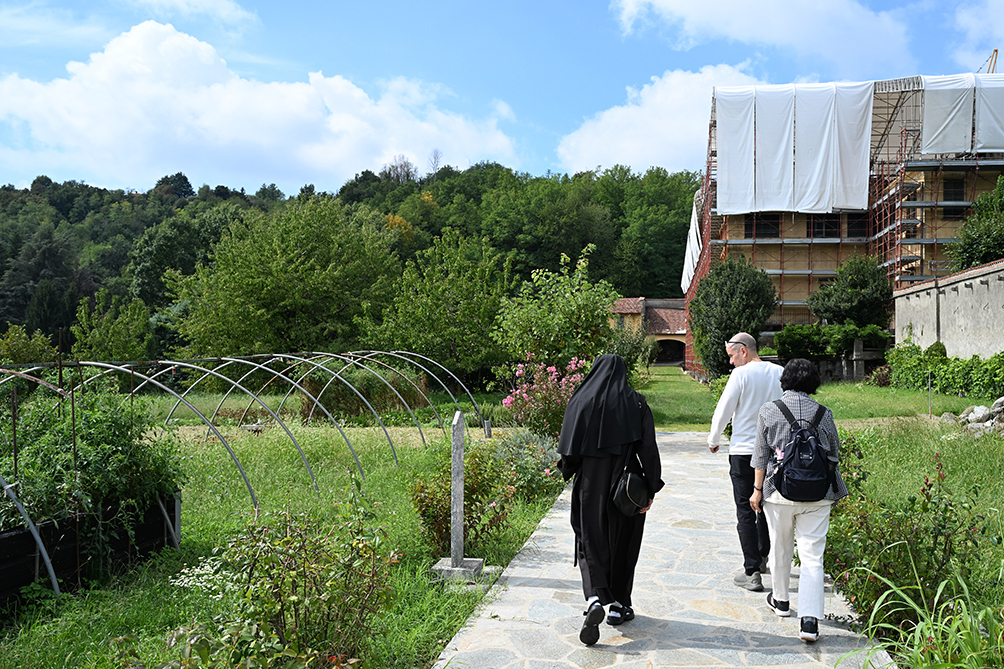
The relics were not the only thing the fire spared. When Gino, the caretaker, opened a green iron gate beside the monastery, a wide garden spread out under a blue sky. A variety of crops were thriving, and the sisters’ cemetery lay off to one side.
Author Jung Jin, Mother Maria Alessandra Regalia and volunteer Vittorio Acceni walk through the garden of the Romite Ambrosiane monastery in Bernaga. The fire-damaged monastery building is visible on the right.
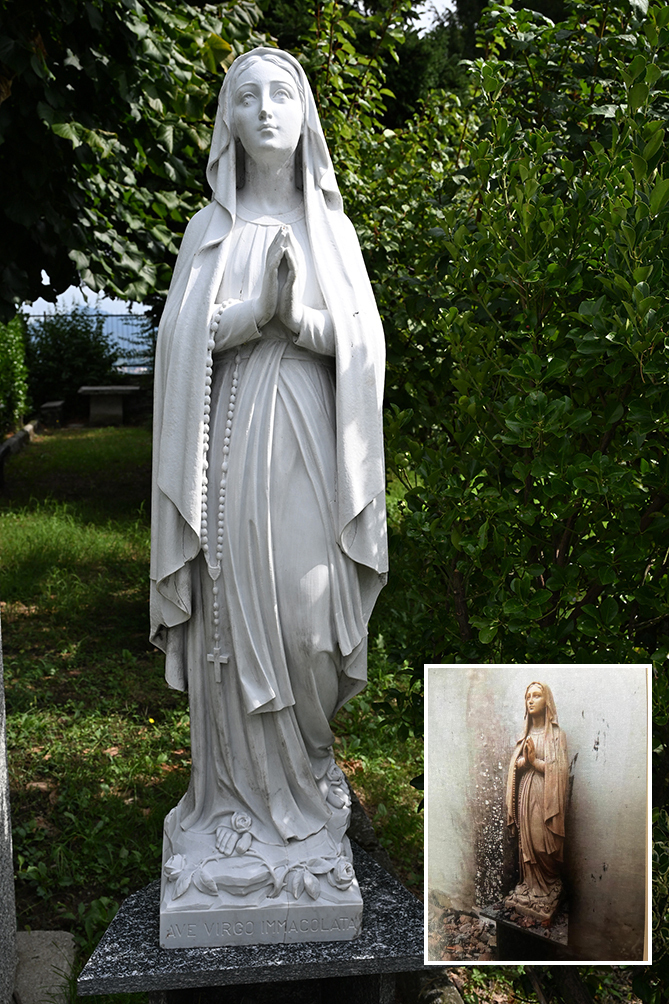
A statue of Our Lady survived the Oct. 11, 2025, fire at the Romite Ambrosiane monastery in Bernaga intact and now stands in the garden. Right: the statue as it was found after the fire.
Exclaiming that it was like the “secret garden” of a fairy tale, Jung stopped in front of a white statue of Our Lady. Mother Alessandra explained, “This statue survived the fire and was rescued and brought here.”
“It’s the most beautiful statue of Mary I’ve seen in my 62 years,” Jung said. “So the Bernaga community has three treasures that survived the fire: Acutis’s relics, the garden and this statue. I think these treasures will become the fragrance of my spiritual life from now on.”
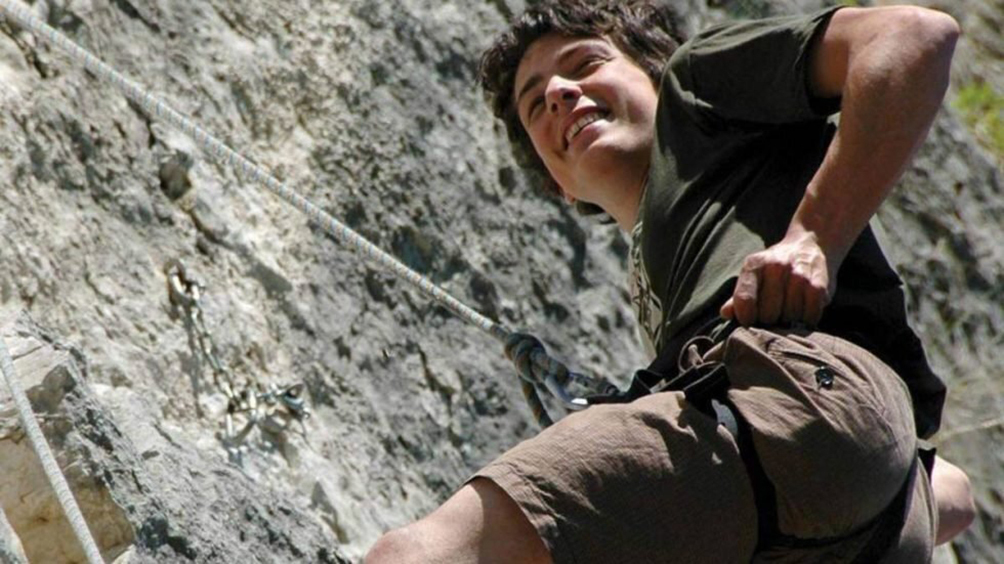
Servant of God Marco Gallo (1994–2011), whose cause for beatification is being promoted by the Archdiocese of Milan. OSV
Another young Servant of God
Before we left Bernaga, Mother Alessandra told us about another young witness of faith: Servant of God Marco Gallo (1994–2011).
Raised in Lecco, Gallo was an ordinary high school student who loved sports and the mountains. He helped classmates who struggled with their studies and, together with his friends, visited elderly people with disabilities. After moving to Monza, he was killed in a traffic accident on his way to school in 2011, at the age of 17. In March of this year, the Archdiocese of Milan opened his cause for beatification and canonization. Five years before Gallo’s death, Acutis had spent his last three days on earth at San Gerardo Hospital in Monza.
“Carlo is a model. Among young people today, too, there are signs of the Gospel. I hope we can recognize them.” (Mother Alessandra)